
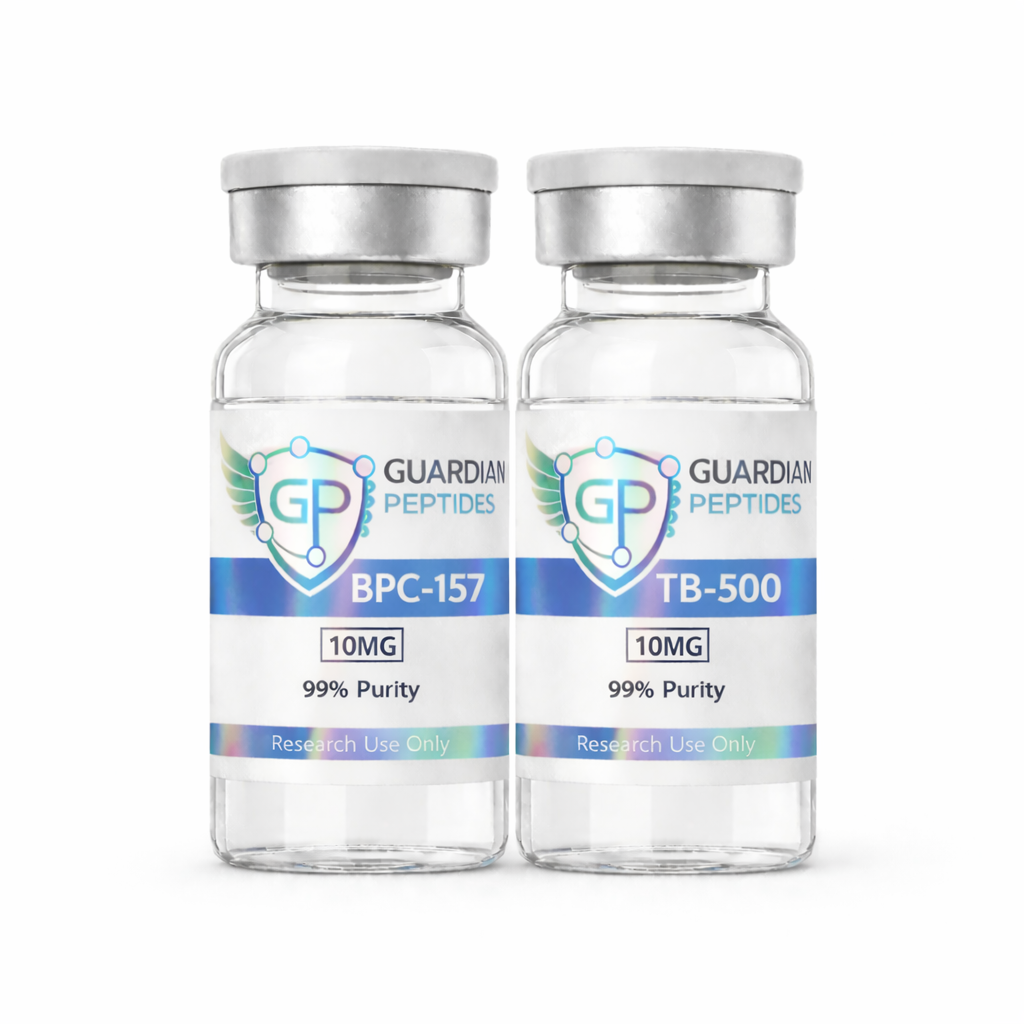
Wolverine Protocol – Separate Vial Research Set
Wolverine Protocol is a grouped research product that allows researchers to purchase the individual BPC-157 and TB-500 components in separate vial form rather than as a combined blend. This format is designed for laboratory research workflows where separate material organization is preferred.
Product Overview
Wolverine Protocol is a grouped product configuration that brings together two individual research peptide products: BPC-157 and TB-500. Unlike Wolverine Blend, which combines both materials into a single lyophilized blend, Wolverine Protocol keeps the individual components separate.
This separate-vial format may be preferred in research workflows where independent material organization, separate inventory tracking, or component-specific preparation is important. It gives researchers access to the same core Wolverine component pairing while preserving the distinction between each individual material.
All included materials are supplied for laboratory research use only. Guardian Peptides does not provide dosing instructions, administration guidance, or human-use recommendations.
Included Research Components
Protocol vs Blend: What Is the Difference?
Wolverine Protocol provides BPC-157 and TB-500 as separate individual products. Wolverine Blend combines BPC-157 and TB-500 into one pre-combined lyophilized blend. Both formats support different research organization preferences.
Understanding Separate-Vial Research Organization
Separate-vial research organization keeps each compound in its own individual vial. This approach differs from combined-material blend systems, where multiple materials are supplied together in one vial.
Separate-vial systems may be useful when researchers want to preserve component separation, organize materials independently, compare individual materials, or maintain separate preparation workflows for each component.
For additional background, visit our Separate Vials vs Combined Materials, Research Stack vs Blend Systems, and Multi-Compound Research Organization pages.
Component Overview
A synthetic peptide frequently studied in cellular, biochemical, and peptide-mediated signaling research.
A thymosin beta-4 fragment studied in research models involving actin-associated pathways and cellular movement processes.
BPC-157 Research Context
BPC-157 is a synthetic peptide commonly studied in biochemical and cellular research. Research discussions frequently involve peptide-mediated signaling, cellular response models, and molecular interaction pathways.
TB-500 Research Context
TB-500 is commonly described as a thymosin beta-4 fragment. In research settings, it is often studied in relation to actin-associated pathways, cellular migration models, and peptide interaction systems.
Chemical Information by Component
Wolverine Protocol vs Wolverine Blend
Wolverine Protocol and Wolverine Blend are organized around the same core research components: BPC-157 and TB-500. The difference is how the materials are supplied.
Protocol Family Comparison
Guardian Peptides protocol products allow researchers to purchase individual component products together while keeping the materials separate.
Product Care and Storage
Included lyophilized peptide materials should be stored in a cool, dry place away from direct light. Lyophilized peptides should be stored frozen at -20°C to -80°C for long-term stability. Once reconstituted, store refrigerated between 2°C and 8°C.
To help maintain material integrity, avoid repeated freeze-thaw cycles, prolonged heat exposure, and unnecessary handling.
Frequently Asked Questions
Related Research Resources
Explore related Wolverine Protocol resources, component products, and research organization articles.
Wolverine BlendCompare the combined BPC-157 + TB-500 blend format.
→
BPC-157View the individual BPC-157 research peptide product.
→
TB-500View the individual TB-500 research peptide product.
→
GLOW ProtocolCompare the three-component separate-vial protocol format.
→
KLOW ProtocolCompare the four-component separate-vial protocol format.
→
Purity & Testing InformationLearn more about testing, purity ranges, and quality standards.
→
Reviews
There are no reviews yet