
Compare MOTS-C, NAD+, and SS-31 for Laboratory Research
Guardian Peptides’ mitochondrial research category is designed for researchers comparing materials commonly studied in mitochondrial signaling research, redox-related pathway analysis, cellular stress-response models, coenzyme systems, and mitochondria-associated molecular interaction studies.
MOTS-C
MOTS-C is a synthetic mitochondrial-derived peptide analog commonly referenced in biochemical and cellular research involving mitochondrial signaling pathways, cellular stress-response models, metabolic pathway signaling research, and peptide-mediated molecular interactions.
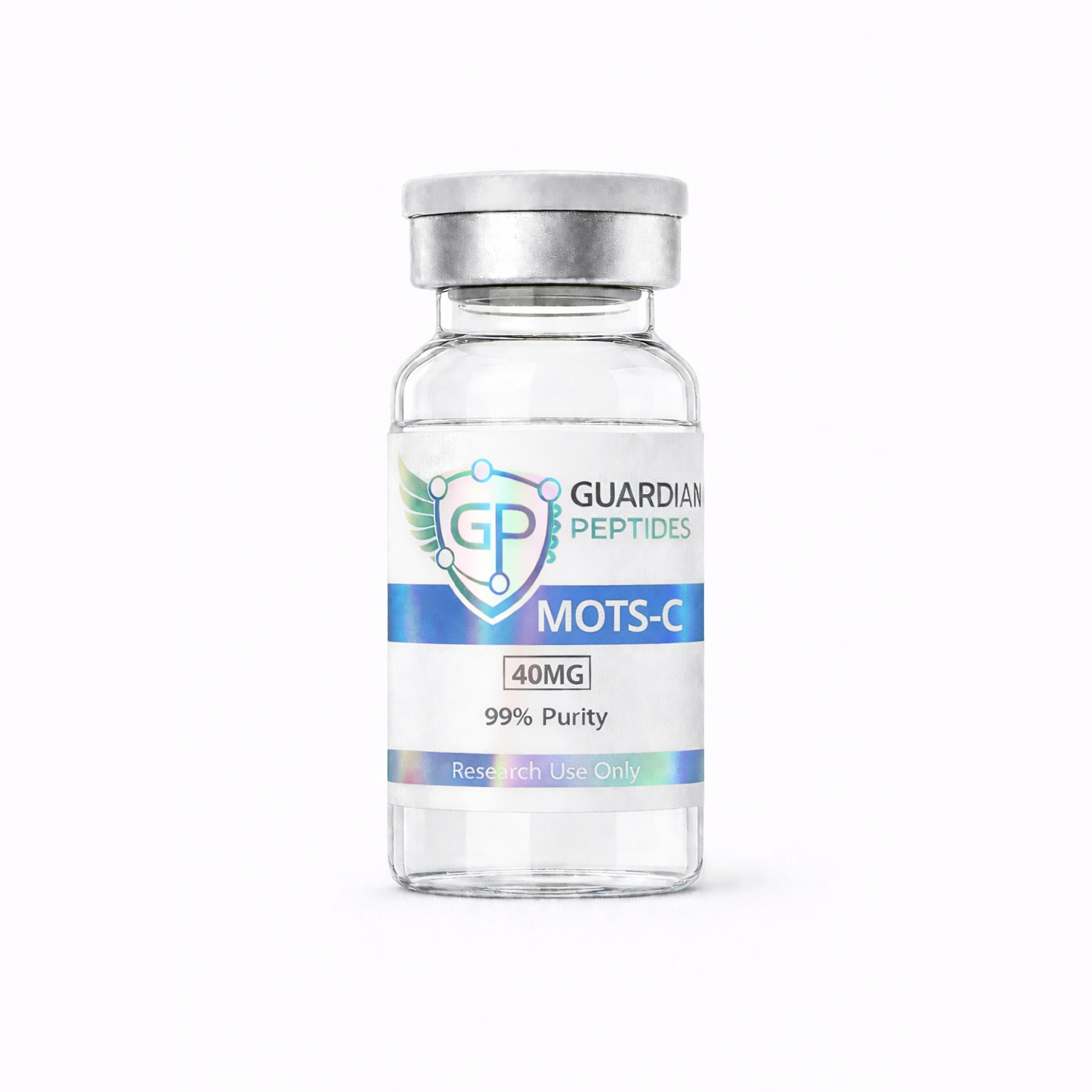
- Research category: Mitochondrial-derived peptide research.
- Pathway focus: Mitochondrial signaling, cellular stress-response models, AMPK-associated signaling research, and peptide-mediated pathway studies.
- Research use: Commonly evaluated in laboratory models involving cellular adaptation, mitochondrial communication, and intracellular signaling dynamics.
- Format: Supplied as a lyophilized powder material requiring reconstitution prior to laboratory use.
NAD+
NAD+ is a nucleotide coenzyme research material commonly referenced in biochemical studies involving redox-related pathways, electron transfer systems, coenzyme cycling, cellular metabolism models, and molecular interaction research.

- Research category: Nucleotide coenzyme research.
- Pathway focus: Redox-related systems, NAD+/NADH cycling, coenzyme pathways, electron transfer models, and cellular metabolism research.
- Research use: Commonly evaluated in biochemical models involving oxidative-reductive reactions, enzyme systems, and intracellular cofactor dynamics.
- Format: Supplied as a lyophilized powder material requiring reconstitution prior to laboratory use.
SS-31
SS-31 is a synthetic mitochondria-targeted peptide commonly referenced in biochemical and cellular research involving mitochondria-associated molecular interactions, inner membrane research models, cardiolipin-associated pathway studies, and peptide signaling dynamics.

- Research category: Mitochondria-targeted peptide research.
- Pathway focus: Mitochondrial inner membrane research, cardiolipin-associated interaction studies, membrane potential models, and peptide-membrane interaction research.
- Research use: Commonly evaluated in laboratory models involving mitochondrial membrane dynamics and mitochondria-associated molecular interactions.
- Format: Supplied as a lyophilized powder material requiring reconstitution prior to laboratory use.
MOTS-C vs. NAD+ vs. SS-31
Each material supports a different research angle within mitochondrial and cellular pathway studies. MOTS-C is commonly discussed in mitochondrial-derived peptide signaling research, NAD+ in coenzyme and redox-related biochemical models, and SS-31 in mitochondria-targeted peptide interaction studies.
Mitochondrial Pathway Research Considerations
Mitochondrial research materials are often evaluated in relation to cellular signaling, redox state, membrane dynamics, coenzyme systems, and intracellular stress-response models.
Signal Pathway Research
MOTS-C is commonly referenced in studies involving mitochondrial communication, cellular stress-response models, and peptide-mediated signaling research.
Redox & Coenzyme Models
NAD+ is frequently evaluated in biochemical systems involving redox cycling, cofactor behavior, enzyme interactions, and cellular metabolism models.
Membrane Interaction Studies
SS-31 is commonly discussed in mitochondria-targeted peptide research involving inner membrane interaction and cardiolipin-associated models.
Lyophilized Handling
Each material is supplied as a lyophilized preparation for research handling, storage, and laboratory preparation workflows.
Important Laboratory Considerations
Research teams evaluating mitochondrial peptide and coenzyme materials often consider documentation, material format, storage conditions, reconstitution workflow, and analytical consistency.
- Material identity: Researchers may compare peptide-based materials such as MOTS-C and SS-31 with nucleotide coenzyme materials such as NAD+ when designing mitochondrial pathway studies.
- Pathway relevance: Mitochondrial research may involve signaling pathways, redox-related systems, inner membrane interaction models, stress-response pathways, and coenzyme cycling.
- Documentation review: COAs, batch details, purity information, and supplier-provided documentation may support laboratory recordkeeping and material review processes.
- Storage workflow: Lyophilized research materials should be handled according to laboratory storage procedures, with attention to temperature control, moisture exposure, and repeated handling cycles.
- Analytical planning: Research teams may evaluate solubility behavior, reconstitution workflow, preparation timing, and material-specific handling procedures before use in laboratory models.
Purity Transparency
Review available supplier-provided COAs and Guardian Peptides’ documentation standards.
Fast U.S. Shipping
Orders are fulfilled and shipped from the United States with efficient handling.
Secure Packaging
Discreet, secure, and insulated packaging supports product integrity during transit.
Research Library
Explore educational pages written with a laboratory-use-only compliance focus.
Related Mitochondrial Research Materials & Resources
Use the links below for product documentation, educational research navigation, and related mitochondrial research material review. All listed materials are supplied strictly for laboratory research use only.
Mitochondrial Research Materials with Clear Documentation
Guardian Peptides provides mitochondrial research materials with clear product information, available purity documentation, U.S. fulfillment, and secure packaging for laboratory research environments.