
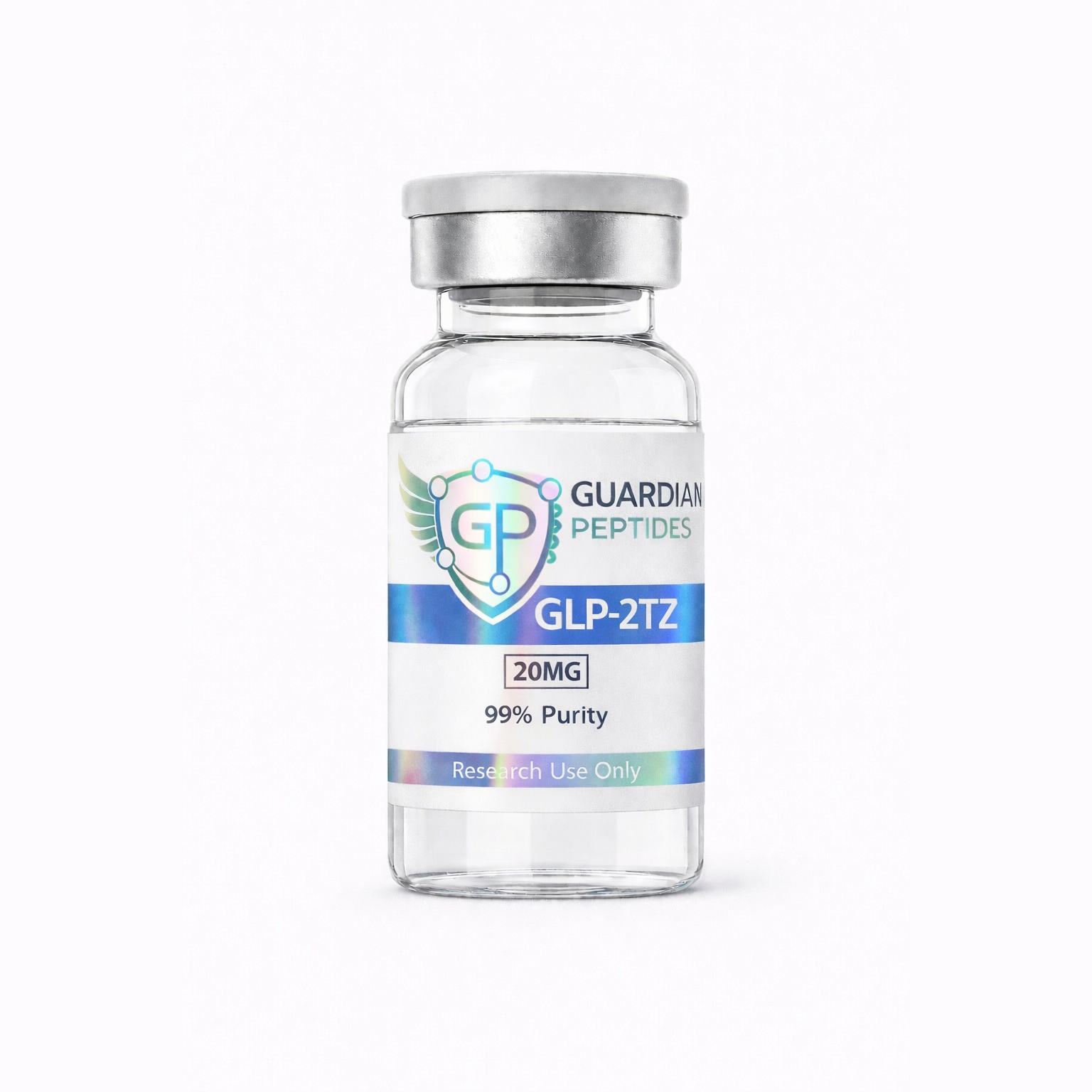
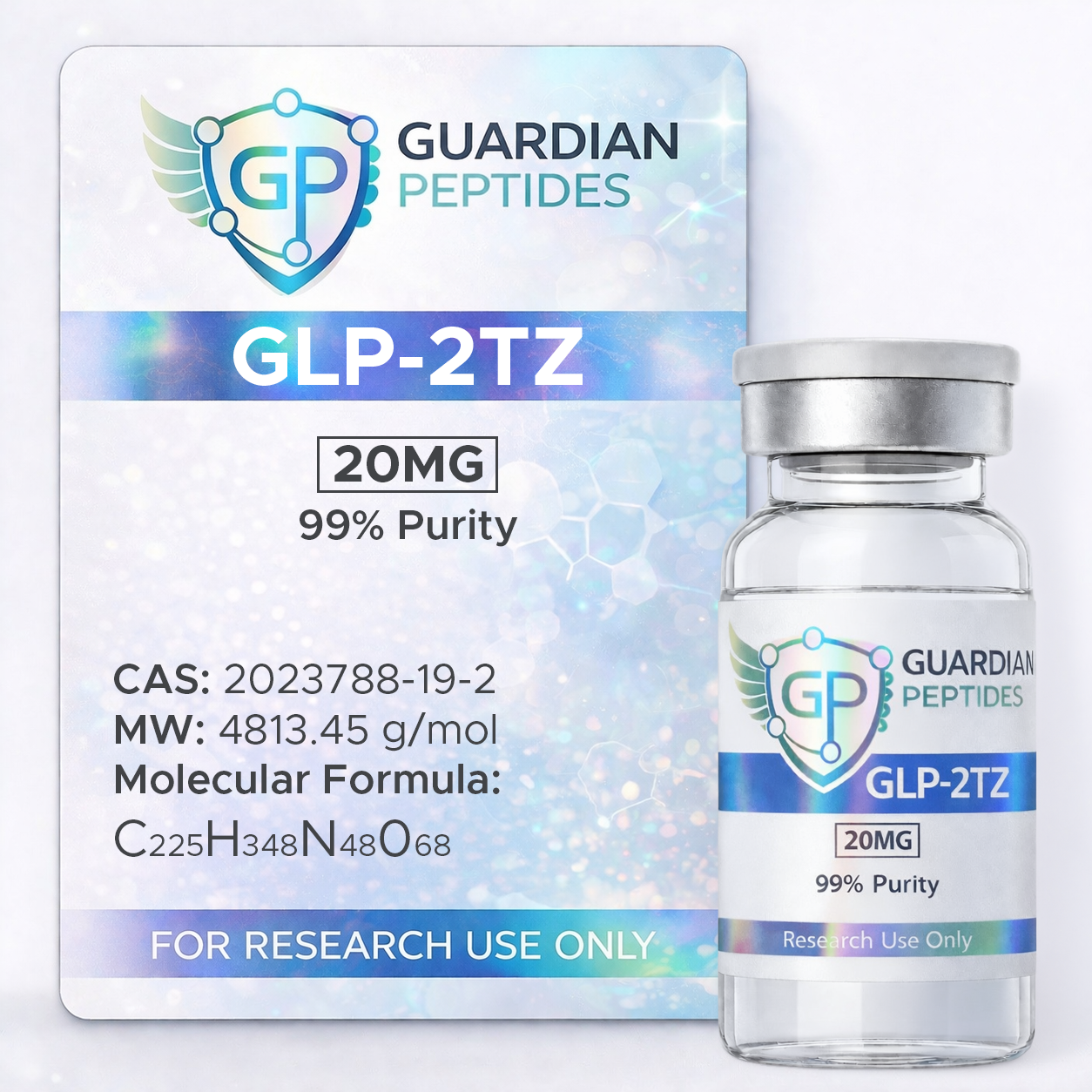
GLP-2TZ Research Peptide – 20mg
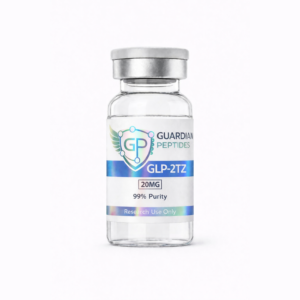
GLP-2TZ is a synthetic dual agonist research peptide used in laboratory investigations involving GLP-1 and GIP receptor systems. This product is supplied as a 20mg lyophilized powder for research use only.
Product Overview
GLP-2TZ is a synthetic peptide analog commonly utilized in biochemical, cellular, and receptor-focused research involving incretin-related signaling pathways. It is categorized as a dual agonist because it is associated with two receptor systems: the glucagon-like peptide-1 receptor and the glucose-dependent insulinotropic polypeptide receptor.
The scientific interest around dual agonists grew from earlier research into single-receptor GLP-1 agonists. Dual agonist molecules are studied because they provide a framework for evaluating multi-receptor signaling, receptor selectivity, peptide-receptor binding, and pathway interaction between GLP-1 and GIP receptor systems.
GLP-2TZ is supplied as lyophilized material for stability during storage and shipping. It must be reconstituted prior to laboratory use. Guardian Peptides does not provide dosing instructions, administration guidance, or human-use recommendations.
Chemical Information
What Makes GLP-2TZ a Dual Agonist?
Dual agonist research focuses on compounds designed to interact with two receptor systems rather than one. GLP-2TZ is associated with GLP-1 and GIP receptor research, allowing investigators to compare dual-receptor models against single-receptor and triple-receptor approaches.
Understanding GLP-2TZ Dual Agonist Research
Dual agonist research is an important area of peptide science centered on receptor interaction, signaling balance, ligand design, and structure-activity relationships. Instead of focusing on only one receptor system, dual agonist peptides provide a framework for studying how two receptor families may be engaged within a single molecule.
In GLP-2TZ research, the two receptor systems of interest are GLP-1 and GIP. These receptors are part of a broader group of peptide-responsive signaling systems that continue to be studied in molecular pharmacology, structural biology, and cellular pathway research.
For broader background, visit our GLP Research Overview, Understanding GLP Receptor Research, and Dual vs Triple Agonist Research pages.
The Two Receptor Systems Studied With GLP-2TZ
GLP-1 Receptor Research
The GLP-1 receptor is a class B G protein-coupled receptor frequently studied in relation to peptide signaling, ligand binding, receptor activation, and downstream cellular communication. GLP-1 receptor research has helped establish a foundation for understanding how peptide ligands interact with receptor binding sites and influence receptor conformation.
GIP Receptor Research
The GIP receptor is another incretin-related receptor system studied for its role in peptide signaling and receptor cross-talk. Within dual agonist research, GIP receptor activity is often evaluated alongside GLP-1 receptor activity to better understand how multi-receptor peptide constructs behave in experimental settings.
GLP-2TZ vs GLP-3RT Research Comparison
GLP-2TZ and GLP-3RT are both used in incretin-related peptide research, but they are studied in different receptor contexts. GLP-2TZ is associated with dual agonist research involving GLP-1 and GIP receptor systems. GLP-3RT adds the glucagon receptor component, making it a triple agonist research peptide.
This distinction is important for researchers comparing single-receptor, dual-receptor, and triple-receptor models. A dual agonist model may be useful for studying GLP-1/GIP pathway interaction, while a triple agonist model expands the research framework to include glucagon receptor signaling as well.
For a deeper comparison, visit our GLP-2TZ vs GLP-3RT Research Overview.
Structural Biology and Receptor Binding
Modern structural biology has helped researchers examine how dual agonist molecules interact with GLP-1 and GIP receptors at a molecular level. Structural studies of incretin receptor systems provide insight into receptor conformations, binding pocket interactions, peptide orientation, and receptor-specific activation states.
This type of research is especially valuable because multi-receptor peptide analogs are not evaluated only by whether they bind to a receptor, but also by how they engage different receptor families and how receptor-specific conformations may influence signaling behavior.
GLP-2TZ belongs to this broader area of peptide research, where the focus is on receptor pharmacology, peptide engineering, molecular binding dynamics, and structure-activity relationships.
Common Research Areas for Dual Agonist Peptides
Dual agonist compounds are studied in a variety of laboratory and scientific contexts, including:
This information is provided for educational and research context only and should not be interpreted as medical, veterinary, dosing, diagnostic, or treatment guidance.
Product Care and Storage
Store GLP-2TZ in a cool, dry place away from direct light. Lyophilized peptide material should be stored frozen at -20°C to -80°C for long-term stability. Once reconstituted, store refrigerated between 2°C and 8°C.
To help maintain material integrity, avoid repeated freeze-thaw cycles, prolonged heat exposure, and unnecessary handling.
Frequently Asked Questions
Related Research Resources
Explore additional Guardian Peptides educational resources related to GLP receptor research, dual versus triple agonist research, storage, handling, and purity standards.
GLP Research OverviewExplore GLP receptor research and protocol-style educational resources.
→
Understanding GLP Receptor ResearchLearn how GLP receptor systems are discussed in research settings.
→
Dual vs Triple Agonist ResearchCompare dual agonist and triple agonist research models.
→
GLP-2TZ vs GLP-3RTReview the difference between dual and triple agonist research peptides.
→
Purity & Testing InformationLearn more about testing, purity ranges, and quality standards.
→

Written comments are withheld for privacy and compliance reasons. Star ratings remain visible, and all feedback — positive and negative — is reviewed to help improve our products, documentation, and service.
Verified Researcher –