
Reconstitution Solutions for Laboratory Research
A research-focused guide to bacteriostatic water, sterile water, acetic acid, and solution selection considerations for lyophilized research materials. This article is intended for laboratory education only and does not provide directions for human, animal, therapeutic, clinical, diagnostic, or personal use.
Bacteriostatic Water
Sterile water with a bacteriostatic preservative system, commonly selected for research workflows where repeated vial access may be part of the laboratory plan.
View Bacteriostatic WaterSterile Water
A preservative-free sterile aqueous option used when researchers prefer a simple water-only solution for compatible materials.
View Sterile WaterAcetic Acid 0.6%
A dilute acidic solution used in certain research contexts where material-specific solubility characteristics are being evaluated.
View Acetic AcidWhy Reconstitution Solutions Matter in Research
Many lyophilized research materials are supplied as freeze-dried powders to support stability during transportation and storage. A reconstitution solution is the liquid medium selected by a laboratory to dissolve or prepare a material for analytical, in vitro, or non-clinical research workflows.
The solution selected can influence clarity, compatibility, solubility behavior, storage planning, preservative exposure, and overall workflow design. Because different materials may behave differently in solution, researchers typically evaluate solution choice based on the characteristics of the material, the concentration needed for analysis, the expected storage window, and the requirements of the specific research method.
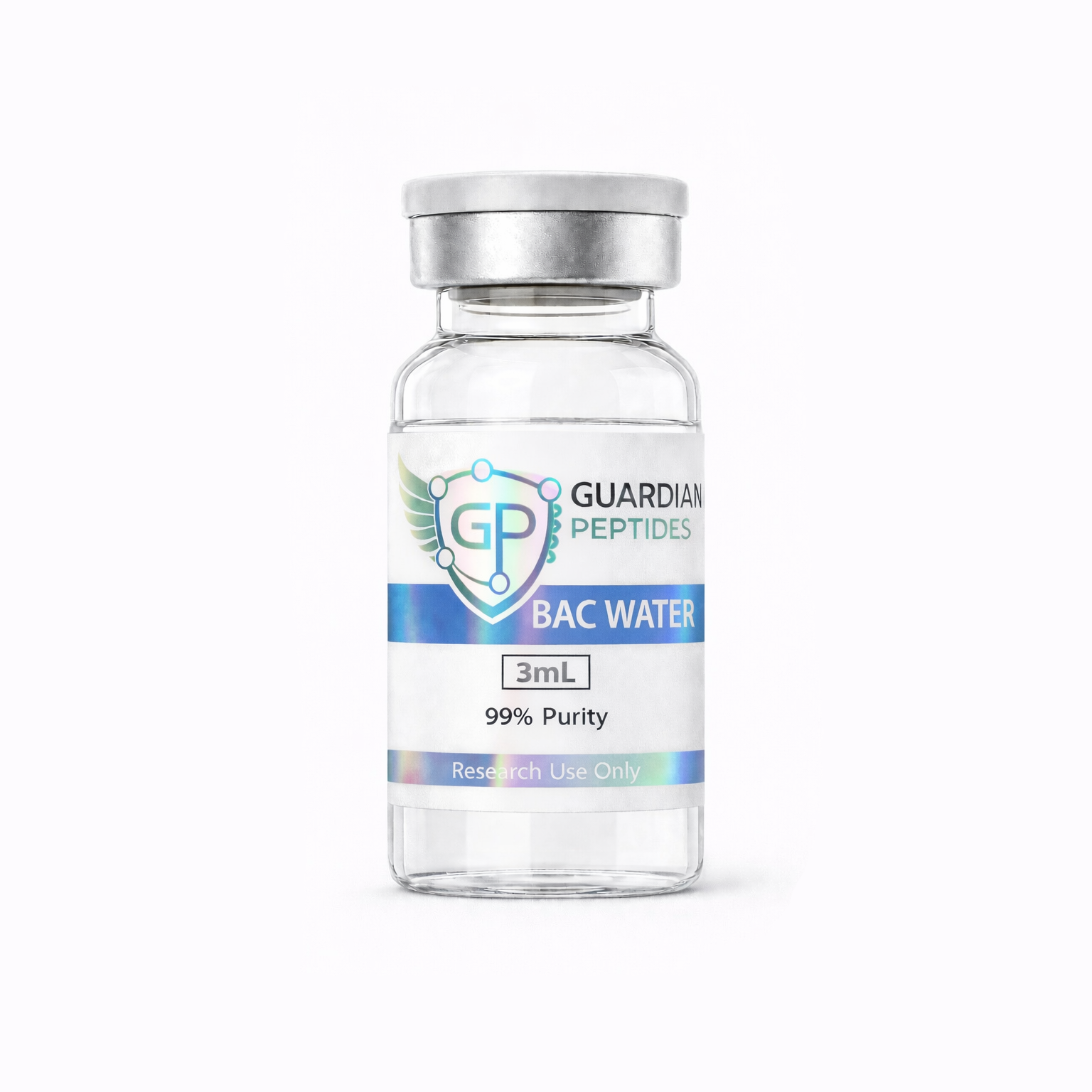
Bacteriostatic Water
Bacteriostatic water is sterile water that contains a bacteriostatic preservative, most commonly benzyl alcohol. In research supply contexts, bacteriostatic water is often discussed because the preservative system is designed to inhibit bacterial growth after initial access to the container.
For researchers comparing solution types, bacteriostatic water is often evaluated for its balance of simplicity, preservative support, clarity, and compatibility with many commonly studied lyophilized materials.
Research-Relevant Characteristics
- Contains sterile water plus a bacteriostatic preservative system.
- Commonly associated with multi-access laboratory workflows.
- Often selected when researchers want a water-based solution with preservative support.
- Typically clear and low-viscosity, making it easy to inspect visually in a laboratory setting.
- Useful as a comparison point against preservative-free sterile water.
When Researchers Compare Bacteriostatic Water Options
Researchers may compare bacteriostatic water products by looking at label information, packaging, preservative declaration, solution clarity, lot consistency, seal integrity, pH characteristics, and supplier transparency.
Guardian Bacteriostatic Water vs USP-Labeled Bacteriostatic Water
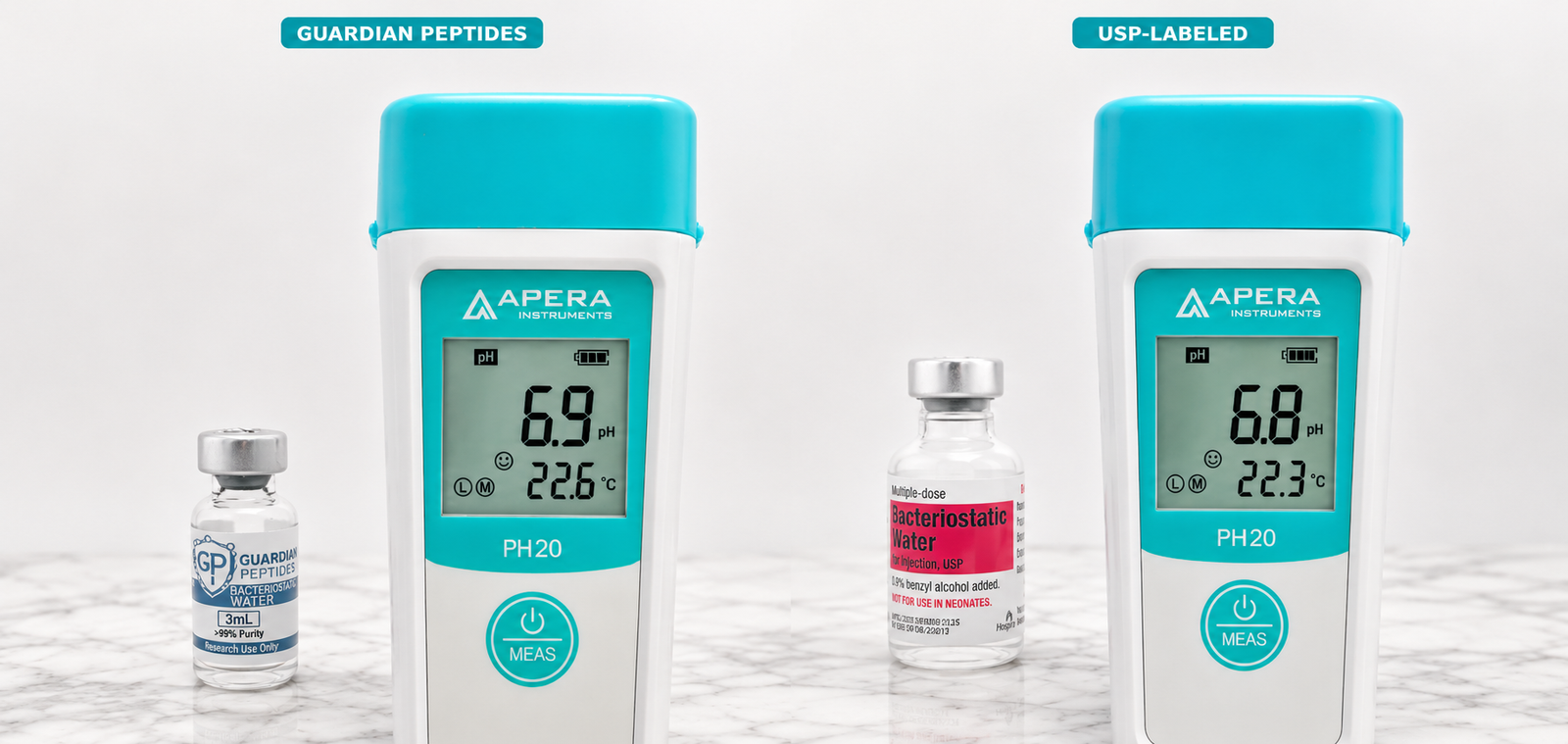
Transparency matters when choosing laboratory supplies. To help researchers visually compare commonly discussed bacteriostatic water options, Guardian Peptides provides a side-by-side comparison between Guardian Bacteriostatic Water and a USP-labeled bacteriostatic water reference product.
Comparison Considerations
| Comparison Area | Guardian Bacteriostatic Water | USP-Labeled Bacteriostatic Water |
|---|---|---|
| General Category | Bacteriostatic water for laboratory research supply use. | USP-labeled bacteriostatic water reference product. |
| Preservative System | Contains bacteriostatic preservative support. | Commonly labeled with bacteriostatic preservative information. |
| Visual Clarity | Researchers can inspect clarity, container integrity, and appearance prior to laboratory use. | Researchers can inspect clarity, container integrity, and appearance prior to laboratory use. |
| pH Comparison | 6.9 | 6.8 |
| Use Positioning | Research use only. Not for human or animal use. | Reference comparison only. Always follow the labeling and intended-use limits of the specific product. |
Sterile Water
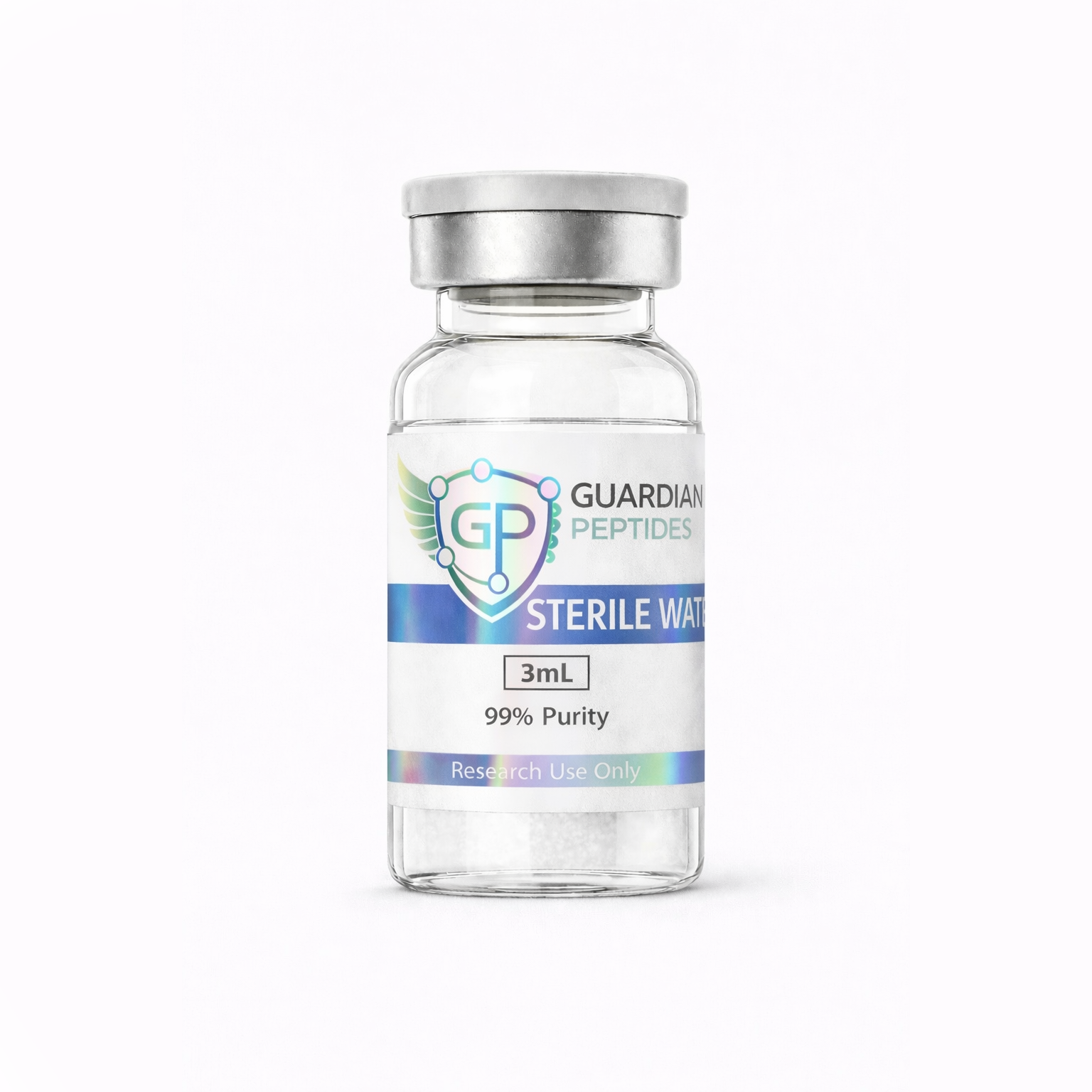
Sterile water is a preservative-free aqueous solution. Unlike bacteriostatic water, it does not contain benzyl alcohol or another bacteriostatic preservative. For research workflows where researchers want to avoid preservative exposure, sterile water may be considered as part of solution compatibility planning.
Research-Relevant Characteristics
- Preservative-free sterile aqueous solution.
- Simple formulation for researchers who want to minimize added components.
- Useful for comparing preservative-free and preservative-containing solution behavior.
- May be preferred in workflows where immediate analytical use is planned.
Because sterile water lacks a preservative system, researchers should account for container access, storage timing, and contamination-control procedures within their own laboratory SOPs.
Acetic Acid 0.6%
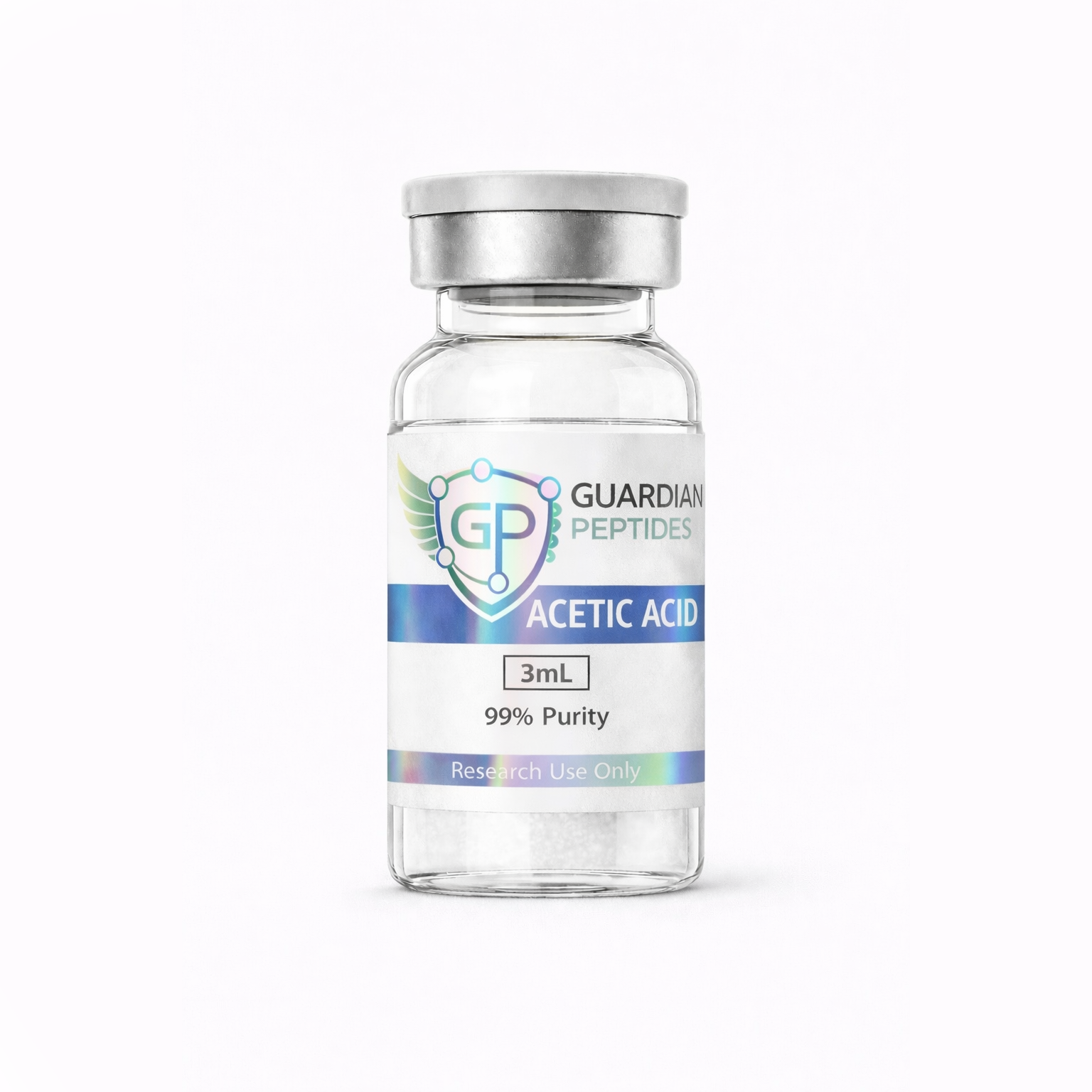
Acetic acid is a weak organic acid. In research settings, dilute acetic acid solutions may be evaluated when studying materials with solubility characteristics that differ from standard water-based preparation. Some research materials are more sensitive to pH environment, ionic conditions, hydrophobicity, charge distribution, or aggregation behavior.
Why Researchers Evaluate Acidic Solutions
- Some materials demonstrate different solubility behavior under mildly acidic conditions.
- Acidic environments can be useful for material-specific compatibility evaluations.
- Researchers may compare clarity, precipitation tendency, and storage behavior across solution types.
- Acetic acid can be part of a broader solubility-screening strategy in non-clinical research.
Bacteriostatic Water vs Sterile Water vs Acetic Acid
| Feature | Bacteriostatic Water | Sterile Water | Acetic Acid 0.6% |
|---|---|---|---|
| Preservative | Yes, bacteriostatic preservative system. | No preservative. | No bacteriostatic preservative; acidic solution. |
| Primary Research Role | General water-based research solution with preservative support. | Preservative-free aqueous research solution. | Material-specific acidic solution option. |
| Common Evaluation Factors | Preservative content, clarity, pH, packaging, storage planning. | Preservative-free needs, clarity, handling window, SOP controls. | Solubility behavior, pH compatibility, material sensitivity. |
| Best Discussed As | Research-use solution selection. | Research-use solution selection. | Research-use solubility support. |
Storage and Handling Considerations
Storage planning is an important part of laboratory research supply management. Researchers commonly evaluate temperature exposure, light exposure, freeze-thaw sensitivity, container integrity, and time-in-solution when working with lyophilized materials and aqueous solutions.
Before Solution Selection
- Review material-specific solubility information.
- Confirm whether preservative exposure is acceptable for the research workflow.
- Consider whether acidic, neutral, or preservative-free conditions are preferred.
- Document lot numbers, dates, and storage conditions.
After Material Is in Solution
- Follow internal laboratory SOPs for storage.
- Protect sensitive materials from unnecessary light or temperature exposure.
- Minimize repeated temperature cycling where relevant.
- Maintain clean labeling and traceability records.
For broader information on material care, visit our Purity & Testing page and our Research Library.
Common Research Questions
Is bacteriostatic water the same as sterile water?
No. Bacteriostatic water contains a preservative system, while sterile water is preservative-free.
Why compare Guardian Bacteriostatic Water to USP-labeled bacteriostatic water?
Researchers often want transparency around appearance, pH characteristics, packaging, and general formulation category. A side-by-side comparison helps provide a clearer visual reference.
Why would a researcher evaluate acetic acid?
Dilute acetic acid may be evaluated in research settings when material-specific solubility or pH-environment behavior is relevant to the planned non-clinical workflow.
Does this page explain how to reconstitute peptides?
No. This page is intentionally limited to general research-supply education, comparison, storage considerations, and solution-selection concepts. It does not provide procedural preparation instructions.
Are these products intended for human or animal use?
No. Guardian Peptides products are sold strictly for laboratory research use only and are not intended for human consumption, animal use, therapeutic use, diagnostic use, or clinical application.
Explore Reconstitution Solutions
Shop research-use-only solution options for laboratory workflows, including bacteriostatic water, sterile water, and acetic acid.