
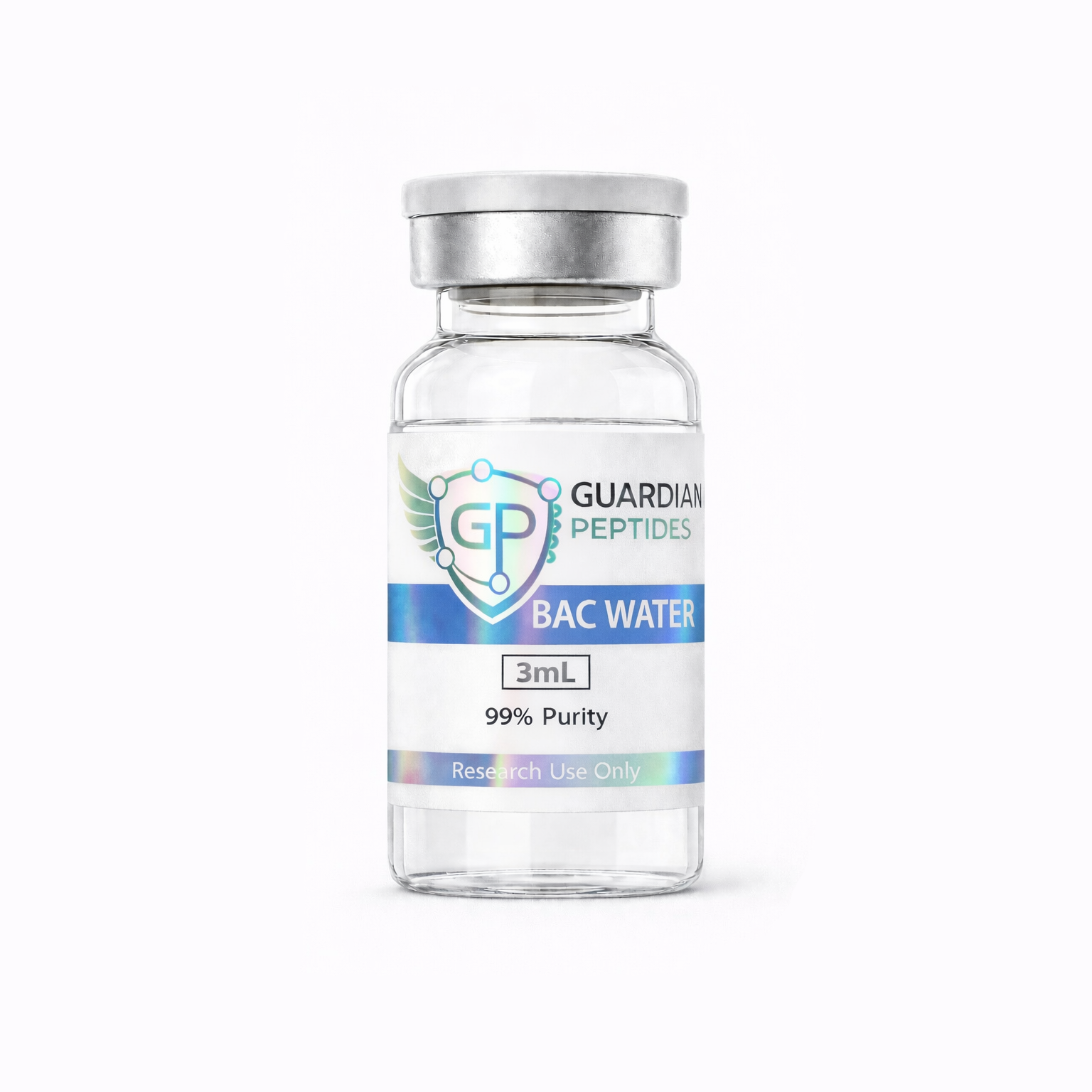
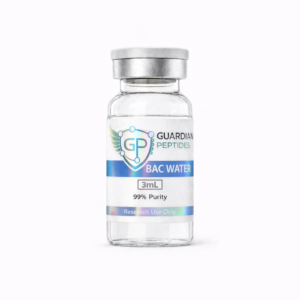
Bacteriostatic Water – 3mL
Bacteriostatic Water is a sterile, non-pyrogenic research solution containing 0.9% benzyl alcohol as a preservative. It is commonly used in controlled laboratory workflows involving peptide reconstitution, solution preparation, and research material handling.
Product Overview
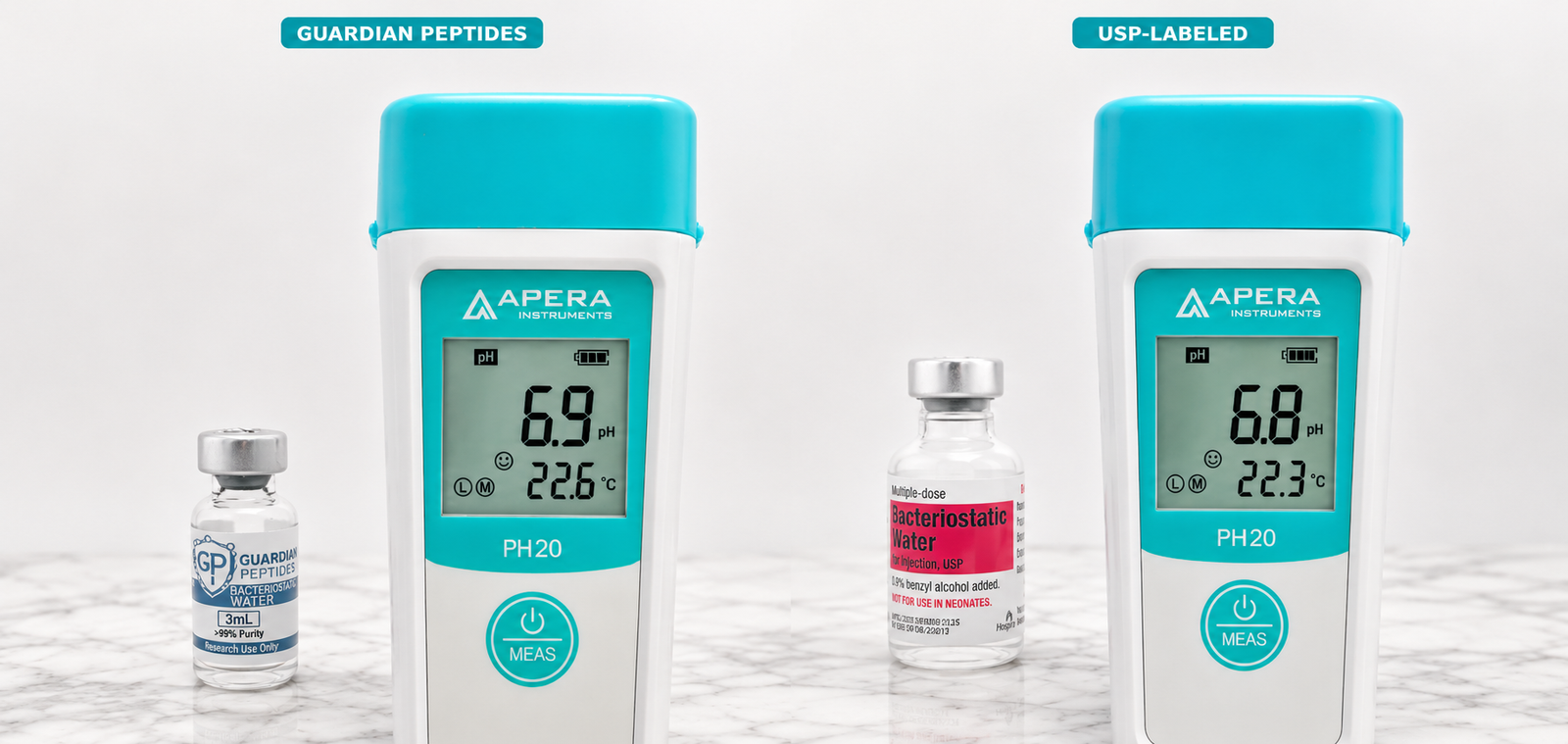
Bacteriostatic Water is a sterile, non-pyrogenic solution containing 0.9% benzyl alcohol. In laboratory settings, it is commonly used as a reconstitution solution for research materials supplied in lyophilized powder form.
The inclusion of benzyl alcohol helps inhibit microbial growth after the solution container has been accessed, making bacteriostatic water different from sterile water products that do not contain a preservative. This distinction is important in controlled research environments where solution handling, storage, and contamination prevention are part of the workflow.
This product is supplied in a 3mL vial and is intended strictly for laboratory research use only. It is not intended for human consumption, animal use, medical use, veterinary use, or household use.
Chemical Information
What Is Bacteriostatic Water?
Bacteriostatic Water is sterile water containing a bacteriostatic preservative. The 0.9% benzyl alcohol component helps inhibit microbial growth, which differentiates it from sterile water products that do not contain a preservative.
Bacteriostatic Water in Research Reconstitution Workflows
Many research materials are supplied in lyophilized powder form for stability. Before use in laboratory settings, these materials often require reconstitution with an appropriate solution. Bacteriostatic water is one option used in research workflows where a sterile solution with a preservative is desired.
The choice of reconstitution solution depends on the research material, study design, handling requirements, and laboratory protocol. Bacteriostatic water, sterile water, and acetic acid solutions are not interchangeable in every context, so researchers should select the solution appropriate for their specific laboratory application.
For a broader comparison of solution types, visit our Reconstitution Solutions Guide.
Bacteriostatic Water vs Sterile Water vs Acetic Acid
Different reconstitution solutions serve different research purposes. Bacteriostatic water contains benzyl alcohol as a preservative, sterile water does not contain a preservative, and acetic acid solutions are used in specific laboratory contexts where an acidic solution is required.
Contains 0.9% benzyl alcohol as a preservative and is used in controlled research reconstitution workflows.
Sterile water without added preservative, used in research workflows where preservative-free solution is preferred.
An acidic laboratory solution used in specific research contexts depending on material requirements.
Role of Benzyl Alcohol
Benzyl alcohol is included in bacteriostatic water as a preservative. In a research setting, its role is to help inhibit microbial growth after the vial has been accessed, provided the material is handled using appropriate laboratory practices.
The presence of benzyl alcohol is the primary feature that separates bacteriostatic water from sterile water. This difference is important when comparing reconstitution solution options for laboratory research workflows.
Product Care and Storage
Store bacteriostatic water in a cool, dry place away from direct light. Keep the vial tightly sealed and store at controlled room temperature. Do not freeze.
Once used in a research reconstitution workflow, prepared solutions should be handled according to laboratory protocols and stored refrigerated between 2°C and 8°C when applicable. Avoid contamination and use appropriate laboratory handling procedures.
Written comments are withheld for privacy and compliance reasons. Star ratings remain visible, and all feedback — positive and negative — is reviewed to help improve our products, documentation, and service.
Verified Researcher (verified owner) –
Verified Researcher (verified owner) –
Verified Researcher (verified owner) –
Verified Researcher (verified owner) –
Verified Researcher (verified owner) –
Verified Researcher (verified owner) –
Verified Researcher (verified owner) –
Verified Researcher (verified owner) –
Verified Researcher (verified owner) –
Verified Researcher (verified owner) –